

We live in a world that runs from suffering. Everything around us is designed to make life easier, more comfortable, and free from pain. When hardship strikes, we are quick to ask, Why me? When tragedy comes, we are told to numb it, escape it, or bury it beneath busyness. The underlying belief is simple: suffering is never good for anyone.
But that belief is a myth. Deep down, we all know it. The strongest athletes are forged in training that stretches them beyond their limits. The bravest soldiers endure hardship for the sake of freedom. The most loving parents sacrifice sleep, money, and time for the well-being of their children. Again and again, we see that good things come through pain, and that strength is born in weakness.
Even so, the reality of suffering cuts far deeper than sports or sleepless nights. Pain touches every one of us. It can knock the wind out of our lungs and leave us reeling. It can come suddenly or stretch on for years. And it always asks us the same haunting question: What is the point of this?
I know this question firsthand. On June 27, 2022, my wife and I received the phone call no parent ever wants to hear. Our oldest son, Isaac—just 24 years old, a Marine, a soldier, a brother, and a loving uncle—was gone. He died from an accidental fentanyl overdose while on leave.

There are no words that can fully capture that kind of pain. The loss of a child tears a hole in your heart that never really closes this side of eternity. It shakes you to the core. It makes you wrestle with God in ways you never imagined.
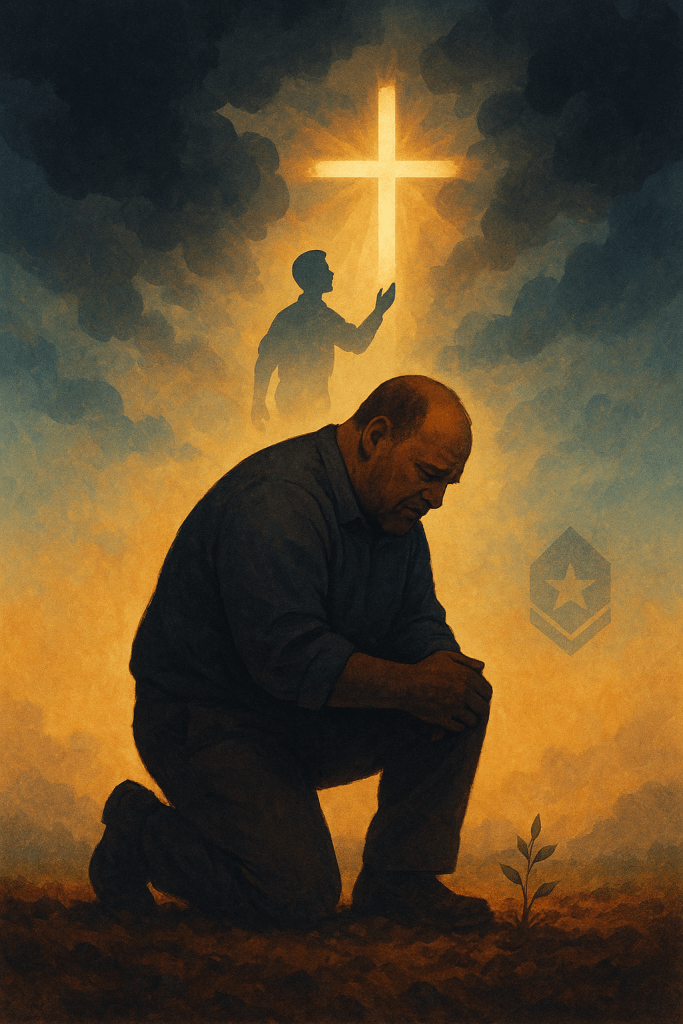
And yet, even here, I can testify: suffering has not destroyed me. It has driven me deeper into the arms of Christ. Through tears, I have learned to trust in the Father’s love in a way I never had before. Through loss, I have come to see the supremacy of Christ as my only hope. Isaac’s death has become, in the mystery of God’s providence, a furnace that refines my faith and reminds me of eternity.
This is the paradox of suffering. What feels like it will break us often becomes the very thing that strengthens us. The apostle Paul wrote, “We rejoice in our sufferings, knowing that suffering produces endurance, and endurance produces character, and character produces hope” (Romans 5:3–4). That isn’t just a verse to put on a card—it’s the reality I’ve had to cling to. Hope is born in the fire of affliction.
History confirms this truth. The early church grew not in seasons of comfort but in the face of persecution. Reformers stood firm when imprisoned and exiled. Great men and women of faith have always been shaped, not by ease, but by trial. Even outside the church, we admire those who endure hardship and rise stronger for it. Why? Because suffering, though painful, has a strange way of revealing what is most true and most lasting.
But if that’s all we say—that suffering makes us stronger—we miss the greater point. For the Christian, suffering is not just a tool for resilience. It is a reminder that we are not home yet. It lifts our eyes from the temporary to the eternal. It shows us that we cannot save ourselves, that our strength is not enough, and that we need a Savior.
And here is the hope that speaks not only to Christians but to anyone willing to listen: the greatest good in history came through the greatest suffering the world has ever seen. On a cross outside Jerusalem, the Son of God endured betrayal, beatings, mockery, and death. What looked like defeat became victory. Through His wounds came our healing. Through His suffering came our salvation.
If God could take the darkest day of history—the crucifixion of Christ—and make it the brightest hope for mankind, can He not also redeem our suffering? Isaac’s death did not make sense to me in the moment, and in many ways, it still doesn’t. But I can trust the Father who gave His own Son, knowing He is not distant from pain but has entered it. I can rest in Christ, who bore the weight of sin and death so that one day there will be no more tears.
For those reading this who do not yet know Christ, let me say this gently but directly: your suffering, too, points somewhere. It points beyond this world. It whispers that comfort is temporary and that eternity matters. It calls you to seek the God who alone can bring meaning out of pain. He does not promise a life free of suffering, but He does promise that suffering is never wasted. In Him, your darkest night can give way to eternal dawn.
The myth that suffering is not good for people collapses under the weight of Scripture, history, and personal testimony. Suffering may hurt, but it also heals. It may wound, but it also refines. It may take, but it also gives—driving us to Christ, deepening our faith, and anchoring our hope.
And one day, for those who belong to Jesus, the suffering will end. The Bible promises that God Himself will wipe away every tear from our eyes, and death shall be no more (Revelation 21:4). Until that day, we walk by faith, trusting that even in our pain, the Father’s love is real, and the Son’s work is enough.
 TheoloJeep
Leave a comment