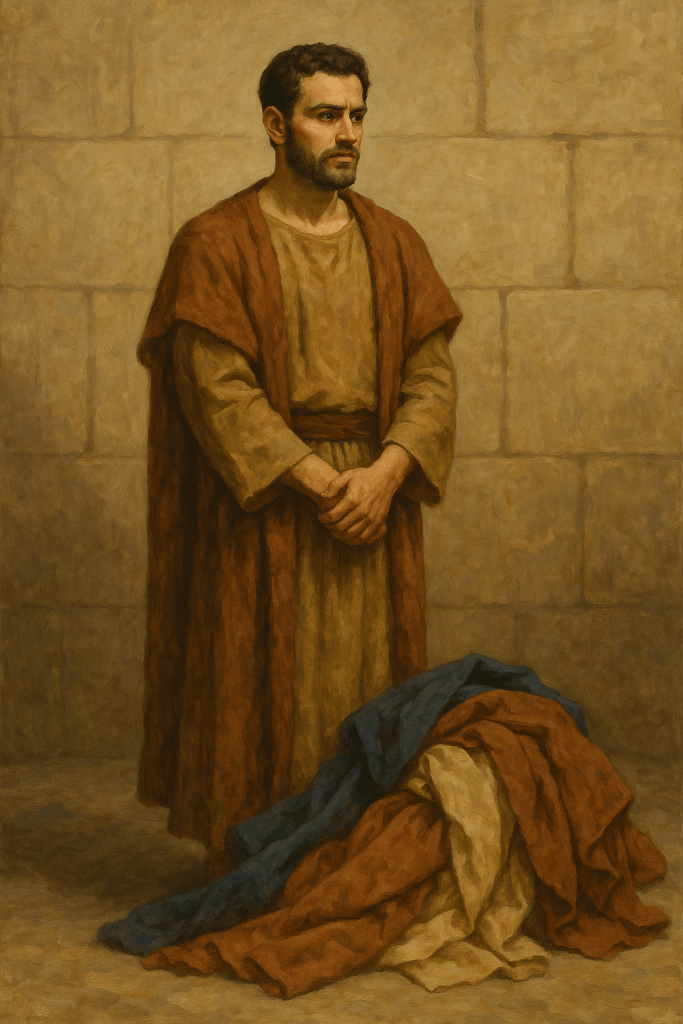
1) The stadium and the stones
Sunday afternoon, the doors opened at State Farm Stadium in Glendale, Arizona, and a river of people—families with toddlers balanced on hips, college students in hoodies, retirees in flag pins, pastors in Sunday suits—flowed into the bowl of seats until the place looked like a living topography of grief and resolve. They came to remember a husband and father, a founder, an agitator of minds, a campus evangelist through political dialogue. They came to mourn Charlie Kirk. They came to pick up a fallen standard. News cameras counted the thousands and then tens of thousands; the roster of speakers stretched from a president to cabinet officials to friends and coworkers, all taking the stage to say, in one way or another, “What he carried, we will carry now.”
On the stage, words kept circling back to the same themes: free speech, courage, faith, forgiveness. Erika Kirk stood where no wife ever wants to stand and offered a sentence few hearts can form so soon: “I forgive him,” she said of the accused shooter, her voice becoming a kind of echo across the stadium—an echo most Christians have heard before, somewhere between a hill called Golgotha and a prayer for enemies—an echo that reaches further back still, to a young church deacon named Stephen who, with blood in his mouth and heaven in his eyes, prayed, “Lord, do not hold this sin against them.”
This is not the first time a crowd has gathered after a killing to remember a witness and pledge themselves to a mission. It happened once in Jerusalem. When they dragged Stephen out through the gate and the stones began to fly, the witnesses placed their cloaks at the feet of a young man named Saul. Saul stood guard; Stephen looked up; the church learned, in an afternoon, what it means to lose a leader and gain a cry that will not be silenced. From that day, a persecution rose like a storm over Jerusalem; and yet—as if the Spirit Himself were the prevailing wind—the gospel scattered like seed. (Acts 7:54–8:4)
If the stadium Sunday felt like a rally to some and a requiem to others, the Sanhedrin’s courtyard once felt like a courtroom to some and a coronation to others—the enthronement of Jesus, not on a chair but in the vision of a dying man who said, “Behold, I see the heavens opened, and the Son of Man standing at the right hand of God.” (Acts 7:56) Stephen’s eyes testified. His words witnessed. His wounds spoke, and the church heard. The apostles understood: witness is not a brand of speech; it is a way of life that sometimes ends in blood.
2) What we mean by “witness”
Christ defines witness before the first martyr ever falls: “You will be my witnesses,” He says (Acts 1:8). The grammar of the Spirit is future-tense certainty: you will be. Not merely public speakers or platform builders—witnesses. That word, martys, will soon carry heavy freight.
Stephen’s ministry sketches the template. He is marked not by celebrity but by character—“full of faith and of the Holy Spirit” (Acts 6:5)—a table-server, a dispute-solver, a man whose preaching is a biblical theology of Israel’s story bending toward Christ. He reasons in synagogues. He confounds opponents “by the Spirit and wisdom” (Acts 6:10). He answers charges not by playing procedural games but by telling the truth of God’s works. Then, in the deepest sense, he embodies the message by the way he dies: God-ward gaze, Christ-ward prayer, enemy-ward forgiveness.
That is witness. And every time the church takes up the word for our own public vocation—whether in pulpits or podcasts, in legislative chambers or college quads—we ought to set our definitions by Stephen’s horizon: truth, holiness, courage, and love, even under stones.
3) What happened at Utah Valley University
If Stephen’s martyrdom unfolded at the friction point between gospel proclamation and religious power, Charlie Kirk’s death unfolded at the friction point between free speech and political rage. On September 10, 2025, while speaking at Utah Valley University—a campus event pitched to encounter dissent through open debate—Kirk was shot and fatally wounded. Utah’s governor called it what most people feared it was: a political assassination. Days later, a 22-year-old suspect, Tyler Robinson, was arrested and charged. This is not rumor; this is the public record we now carry as a nation.
The details have continued to fill in as investigators have traced the path of the bullet and the vantage points on campus. Coverage has noted the improbable physics that kept the round from exiting his body and hitting those behind him—a surgeon calling it, in one sense, a “miracle” for those spared, even as the man on the stage could not be saved. The rifle, the rooftop, the chaos—each report has added another stitch to a shroud that, for many, still doesn’t fit the man they knew.
We owe it to the truth—and to the dead—not to embroider it. But neither should we flatten it. Charlie Kirk did not die in a vacuum. He died in the public square, doing what he had built his adult life to do: provoking argument, stirring young minds, pressing claims about truth and country and God. If Stephen’s forum was the Sanhedrin; Charlie’s forum was the American campus. If Stephen’s rhetoric was a Bible-saturated history of Israel ending in the Righteous One; Charlie’s rhetoric was a culture-saturated argument about America, its founding goods, its present threats, and, for him, the transcendent roots of both. Both chose to speak where opposition lives.
4) Why the memorial felt like Acts
The stadium service had a grammar we recognize. There was grief named plainly. There was honor for the dead. There were vows from the living to “carry the work forward.” Some described Kirk as a martyr; the president called him one. Leaders spoke of his influence on a generation, of the mission he insisted was bigger than any one person. They urged young people to show up, speak up, and never be cowed by mobs—digital or physical. The liturgy of a movement is always partly a commissioning, and today’s commissioning was explicit.
If you read Acts slowly, you will notice a similar shape on the far side of Stephen’s death. “There arose…a great persecution,” Luke writes, “and they were all scattered” (Acts 8:1). But he does not add, “and the mission paused while they processed their trauma.” He says, instead, “those who were scattered went about preaching the word” (Acts 8:4). In other words, the sorrow of the saints becomes the seed of their scattering, and their scattering becomes the strategy of heaven. The church did not decide to weaponize grief; it decided to evangelize in grief.
So the question a day like today asks of us is simple and searching: What does Christian witness look like now—after a public murder, amid a polarized nation, in a stadium’s worth of tears?
5) Evangelism through political dialogue (what Kirk actually did)
Charlie Kirk was not a pastor; he was, by vocation, a political activist and a campus debater. But he carried that work with explicit religious freight. His colleagues and friends routinely described him as a believer whose convictions animated his public project; his detractors accused him of baptizing partisanship. Both admissions acknowledge the same fact: he made arguments about public life with moral and, yes, often Christian claims stitched through them. That was his way of “evangelism through political dialogue”—to persuade people of truth claims in the contested arena where ideas have civic consequences.
What did that look like in practice?
He met people where they argued. The “Prove Me Wrong” format brought critics to microphones in the sunshine of a quad and said: let’s do this face-to-face. Sometimes the conversations were raw; sometimes tense. But he treated the public square like a mission field where persuasion is a kind of hospitality: “Come, tell me why I’m wrong, and I will tell you what I believe.” He formed an organization for the forum. Turning Point USA built scaffolding—events, media, internships, chapters—designed to pull young adults into public argument. You can dislike the conclusions; you cannot deny the deliberate evangelistic method: gather the people, make the case, leave them with a calling. Sunday’s crowd, swelling two arenas with overflow, testified to a decade of infrastructure built around the idea that conviction must become community. He framed political claims with moral language. Charlie’s speeches often wove scripture-colored maxims about truth, courage, and the goodness of order into constitutional arguments. He rarely separated anthropology from policy; therefore he rarely separated his Christianity from his conservatism. That fusion brought him fervent followers and fierce critics. But one can grant at least this: he meant to persuade the conscience, not simply compute the cost-benefit. He accepted the cost of confrontation. You cannot build a life of public argument in an age of digital mobs and campus rage and imagine it will always be safe. He saw the hecklers. He debated the activists. He walked back into rooms where half the seats were skepticism. Witness that never collides with opposition is called silence.
In these respects—meeting people where they argue, building a forum, framing public matters in moral terms, accepting cost—Kirk’s evangelism through political dialogue has been, in its kind, recognizably Christian: a refusal to cede the agora to lies, an insistence that ideas are not neutral, a belief that human flourishing is tethered to truth.
6) The Stephen parallel: where it works, where it breaks
Parallels are bridges; some carry trucks, some only foot traffic.
Where the parallel carries weight:
Public proclamation with personal risk. Stephen testified in a hostile forum; Charlie debated in hostile forums. Both accepted real risk to speak. (Acts 6:8–10)
Opposition that escalates to violence. Stephen’s disputants could not answer his wisdom; they recruited false witnesses and then picked up stones. Charlie’s disputants could not stomach his platform; someone picked up a rifle. (Acts 6:11–14)
The catalyzing aftermath. Stephen’s death scattered and emboldened. Charlie’s death has galvanized and commissioned. Both moments sent a movement outward with fresh urgency. (Acts 8:1–4)
The posture of forgiveness. Stephen’s last breath asked God not to hold it against them. Erika Kirk’s words walked that same steep path of grace.
Where the parallel must be held with care:
Stephen preached a Bible-long sermon that crescendoed in Jesus the Righteous One. Charlie preached political and moral arguments colored by Christian conviction but not reducible to gospel proclamation. The former is an explicitly evangelistic sermon; the latter is an evangelistic strategy through politics. We should celebrate courage without confusing sermon and stump speech.
Authority and office. Stephen served in an early church office under apostolic witness; Charlie led a civic movement in a constitutional republic. The nature of the conflict differs: religious authorities vs. apostolic gospel in Jerusalem; ideological opponents vs. activist in America.
Definition of martyrdom. Historic Christian martyrdom means killed because of confessing Christ. Was Charlie killed because of Christian confession or because of political animus? Early reporting points to political motive. Many will still call him a martyr; others will speak more carefully. We can honor the dead without seizing a title the church has historically guarded.
These cautions do not diminish the courage of either man; they simply keep our categories clean so that we can learn the right lessons with the right loves.
7) “Cut to the heart” vs. “Change my mind”
Stephen’s sermon in Acts 7 is not a TED Talk; it is a prosecutorial theology. He walks Israel through its own story to show a pattern: you have always resisted the Holy Spirit; you killed the prophets; you betrayed and murdered the Righteous One. The effect is explosive. “When they heard these things, they were enraged,” Luke says (Acts 7:54). The sermon didn’t merely refute error; it exposed hearts.
Charlie’s method—“Prove me wrong”—looks different and yet has a cousin in Stephen’s approach. It told opponents: bring your best argument. It trusted that truth, plainly spoken, can lay bare bad premises. It assumed that some listeners are not beyond persuasion. It further assumed that crowds watching the exchange will learn to love courage and clarity more than sneers and slogans.
The two methods share one wager: Light is better than darkness. Stephen lights Israel’s story until Christ blazes. Charlie lights a policy or principle until a moral frame appears. Stephen invites repentance unto eternal life; Charlie invites a turn back to first principles he believed were God-given and necessary for a humane republic. In both cases, the call is conversion—of soul in Stephen’s case, of mind and culture in Charlie’s. And in both cases, there are listeners who will gnash teeth before they will change.
8) The mantle at our feet
Luke notes an arresting detail: as the stones flew, “the witnesses laid down their garments at the feet of a young man named Saul” (Acts 7:58). Cloaks at a killer’s feet usually mean collusion. But grace has long hands. In a few chapters, Saul will meet the risen Christ, and a church that once ran from him will hear him preach the faith he tried to destroy.
A few days ago, in a stadium filled to its girders, people laid something at someone else’s feet—not garments at a persecutor’s boots, but vows at the threshold of a mission. Some called Kirk a martyr and warned of dangers to the nation; other speakers called him a “disciple,” a “warrior,” a “man who awakened a generation.” They told the crowd what to do with their grief: organize, speak, vote, disciple, build. Some of the language ran hot; some of it ran holy. All of it attempted to answer that ancient disciples’ question: What now?
Here is a Christian answer: pick up the mantle of witness, not merely the banner of a tribe. That mantle will sometimes look like political action; often it will look like personal evangelism, neighbor-love, and the long obedience of building families and churches of truth and grace. It will rarely look like revenge. And it must never look like the intoxication of power. If we leave the stadium vowing to win elections but not souls, to defeat enemies but not sin, then we have laid our cloaks at the wrong feet.
9) Six ways to witness like Stephen and speak like Charlie (without being shrill or shallow)
Anchor your courage in Christ, not in clout. Stephen’s face shone like an angel because he had been looking at God, not at his own metrics (Acts 6:15). Seek the fullness of the Spirit before you seek the fullness of an arena. Courage without communion soon curdles into cruelty.
Know your story and tell it whole. Stephen told Israel its own story in a way that revealed Christ (Acts 7). Christians in America should tell our story—creation to new creation; also the American story—virtues and vices, glories and sins—without propaganda. People can smell omissions. Truth persuades because it refuses to lie, even for a good cause.
Love the person at the microphone. Kirk’s format put opponents at arm’s length and then dropped the arm. That is a dignifying move. Refuse to caricature. Ask questions that show you listened. Pray for the student who came to embarrass you; they might be Nicodemus at noon.
Speak law and gospel, principle and Person. Political evangelism should not be allergic to the name of Jesus. Yes, make the public argument on natural-law grounds when prudent. But let people know the Source of your hope and the Judge of your fears. “We cannot but speak of what we have seen and heard” (Acts 4:20).
Wear forgiveness like armor. Sunday, a widow put on the armor Stephen wore. It does not blunt the pain; it redirects the bloodlust. Nothing confounds a violent age like forgiveness. Nothing frees a witness to keep witnessing like forgiving.
Build institutions, not just moments. Stephen served widows before he preached to lawmakers. The church’s diaconal faithfulness made room for declarative boldness. If all we have are stadiums and streams, the work ends when the camera cuts. Plant churches. Train students. Start schools. House the lonely. Adoption, catechesis, song—these are how movements become mercy.
10) What about the anger?
Some will have left furious at a culture they believe loaded the rifle. Others will leave furious at a movement they believe inflamed a nation. Anger feels honest in a way sadness does not. But anger accelerates. It compresses complex causes into single villains and then dares you to punch.
The church must not be naïve about evil or neat about blame. But neither may we thirst for an apocalypse we can narrate. “The anger of man does not produce the righteousness of God” (James 1:20). What produces the righteousness of God? The gospel, plainly preached and patiently lived; the Word, sown widely; the church, scattered and steadfast; the Spirit, moving sovereignly.
In Jerusalem, the church could have organized a cloak-counting campaign and declared victory when the pile of fabric at Saul’s feet was small. Instead, they preached. They crossed borders. They fed the hungry. They suffered well. They sang in prison. They argued in synagogues and marketplaces with reason and revelation. They refused to shut up; they refused to burn down. They believed in providence more than pyrotechnics.
11) Free speech, sacred speech, and the cost of saying true things
Speakers at Sunday’s memorial invoked the First Amendment with a reverence that, in another age, would have sounded like a prayer. It is right to guard free speech fiercely; the republic withers when dissent is criminalized or dialogue is policed by mobs. But Christians must remember: free speech is a civic grace; true speech is a divine command. If the state tomorrow guaranteed us every microphone in the land, we could still fail our King by saying less than the truth or by saying truth without love.
Stephen’s defense is the model: Scripture-shaped, audience-aware, conscience-aimed. He starts where they live and ends where they must kneel. He does not toy with error; he tears it down. But he does not forget the Person he represents. And at the end, when the stones prove that the Sanhedrin will not be persuaded, Stephen offers the final apologetic—his imitation of Christ.
Let the church learn again how to speak like that: as if heaven were open and the Son of Man were standing.
12) The days after the stadium
What happens now matters more than what happened Sunday. Memorials are turning points only if the turn becomes a path. So what path shall we take?
For the church: Preach Christ from all the Scriptures. Shepherd the angry into holiness. Shepherd the fearful into courage. Shepherd the grieving into hope. Equip the saints for public faithfulness: some will run for office; some will teach third graders; some will moderate a college debate where no one else dares sit at the table; all will bear witness.
For students and young adults: Do not mistake noise for conviction. Read books older than your anger. Learn economics and ethics and the Bible so deeply that slogans sound thin in your mouth. If you want to “carry the mantle,” repent of your private sins before you post about public ones. Your classmates can sniff hypocrisy at 500 yards.
For activists and policymakers: Serve people, not platforms. Speak precisely. Trade in facts, not fever dreams. Treat opponents as image-bearers. Build policies that match your professed anthropology. If you invoke Christ, imitate Him—especially when you hold power.
For those who oppose Charlie’s ideas but mourn his death: Thank you for your humanity. Keep showing up to argue; keep refusing to dehumanize. The republic needs your courage, too. The public square rots when it is populated only by clones.
For all of us: Reject vigilantism and relish justice. Part of loving our enemies is demanding that the magistrate do his work impartially. Vengeance belongs to God; justice belongs to government; forgiveness belongs to saints. Keep each in its lane.
13) “Saul was there”
One more detail about Jerusalem. Luke says Saul “approved of Stephen’s execution” (Acts 8:1). He is there, the young ideologue, eyes hard, breathing threats. If you could have frozen the frame, no one would have placed a bet on Saul the missionary. But God keeps odd ledgers. The blood of Stephen did not turn Saul; the voice of Jesus did. Yet when the Lord later speaks to Ananias about Saul’s calling, the Lord frames it in terms Stephen would have understood: “He is a chosen instrument of mine… for I will show him how much he must suffer for the sake of my name” (Acts 9:15–16).
There was a Saul in the stadium on Sunday; there is a Saul reading this essay; there is a Saul in your classroom, in your city council, in your DMs. He does not look convertible. He tweets stones. He lays moral coats at bad feet. But the Lord has a way of arresting men on roads they paved with their own rage. Do not despair of Sauls. Keep preaching. Keep forgiving. Keep your face toward heaven.
14) If we dare to call him a martyr
Is Charlie Kirk a martyr? Some said it Sunday without blinking. A careful answer requires careful categories. The classical Christian definition hinges on dying because of confession of Christ. Early reporting identifies political animus as the motive—opposition to beliefs, certainly, but framed in civic terms. We do not yet have a full legal account of motive.
So let the church be accurate and generous. If we mean by “martyr” that a man was killed for exercising the God-given human right to speak truthfully in public, for mobilizing consciences, for challenging the spirit of the age, then many will use the word and mean honor. If we mean, in the strict sense, “witness unto blood for the name of Jesus,” then let us use the word sparingly and save it for those whose killers say the quiet part out loud.
But in either sense, the path forward for Christians is the same: witness. In the Constitution’s ink and the Bible’s blood, tell the truth. In classrooms, boardrooms, city halls, and yes, stadiums, tell the truth. And if the day ever comes when the price of telling it is stones or bullets, remember Stephen’s face and Erika’s words and the Savior’s prayer.
15) The last paragraph (for now)
When the stadium finally began to empty, people lingered in the aisles the way mourners do at gravesides—reluctant to leave because leaving feels like losing again. They took last photos. They folded their programs into pocket-sized relics. They hugged strangers who felt like kin for a few hours. And then they went out into the glare of the Arizona sun, toward vans and buses and pickup trucks and rental cars. The air hummed with the same sentence, said in many ways: We can’t let this be the end of something; it has to be the beginning of something.
Jerusalem learned that sentence at the edge of a pit on a road outside the city, while a young fanatic watched coats. They learned that witness does not end at death; it begins again in those who are left standing. A martyr is a seed, Tertullian wrote. The church did not choose the method, but it recognized the harvest.
Go home. Read Acts 6–8 out loud at your table. Pray for your enemies by name. Ask the Spirit for Stephen’s face and Stephen’s courage and Stephen’s forgiveness. Then, when you step back into the public square—whether your square is a sophomore seminar or a city council meeting or a stadium stage—speak the truth in love. If they hear you, give God the glory. If they hate you, give God your hurt. If they hurt you, give God your enemies. And if, in the mystery of providence, your witness costs you more than you ever thought you could give, look up.
He is standing.

 TheoloJeep
Leave a comment