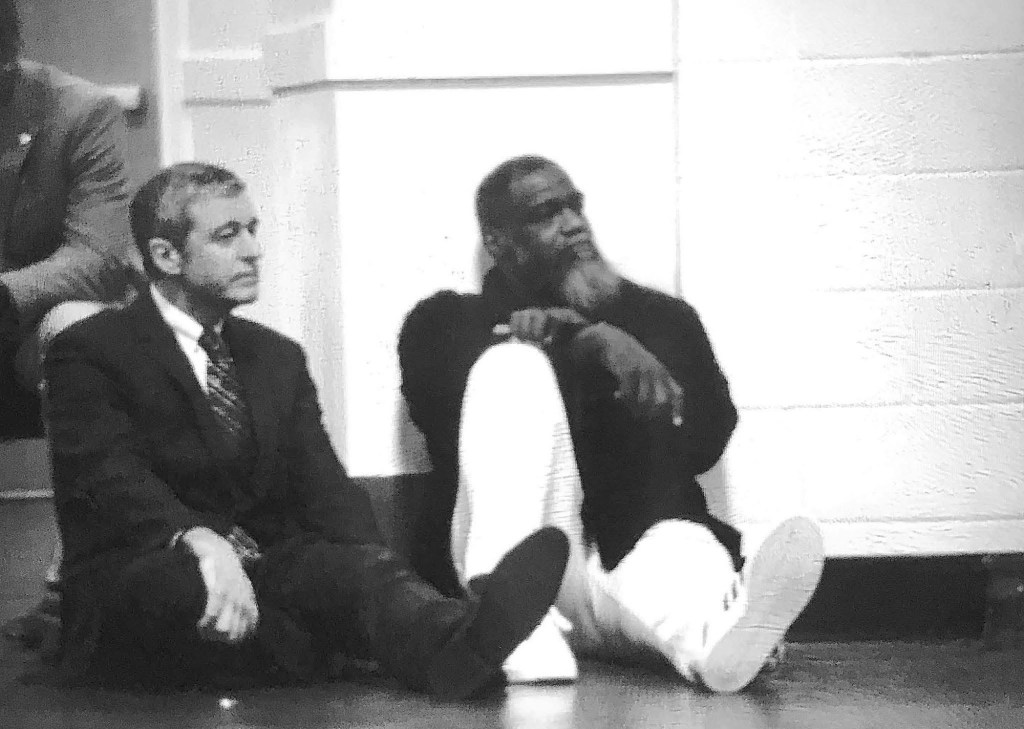
On September 25, 2025, the church lost one of its most pointed, unwavering voices. Voddie Baucham passed into glory, leaving behind a legacy of clarity, courage, and conviction. His death stings deeply—for those who knew him personally, those whose lives were shaped by his teaching, and the church worldwide. We mourn not just his loss but the silence he leaves in a raging culture.
And this loss comes at a heavy cost. In recent months, we’ve also lost other towering voices: John MacArthur, the pastor-theologian who shaped a generation’s view of expository preaching; and Charlie Kirk, whose cultural boldness stirred both admiration and controversy. To lose three truth tellers so close together feels seismic. For many of us, it feels like the rug has been pulled—and the Lord is calling us to stand in new strength.
Yet grief must not end in despair. Our hearts break, but our hope endures in Christ. As I remember Baucham, I also reflect on how his life intersected with mine, and how his legacy compels us forward.
I Knew Him, Even If Briefly

I can’t say I knew him well, but I did meet him. I heard him preach in person several times—moments I won’t forget. There is something holy about sitting in a room, hearing a man speak the Word with authority, seeing his face, sensing the Holy Spirit press through the words. Recordings capture his tone, but not the weight of his presence.
One morning, after a service, I shook his hand. I said something about how his teaching had sharpened me. I will never forget his genuine smile and the humility in his eyes. It was a brief exchange, but one that now stands like a milestone.
That personal encounter anchors much of what I will say below—not as a boast, but as evidence that his influence was not distant or abstract. It was flesh-and-blood, live, and forming.
Seasons of His Ministry
To appreciate his legacy, we must trace the journey.
From the U.S. Pulpit: Clarity, Courage, Word-Centeredness
Before Africa, Baucham was known in the States as pastor, author, speaker—unafraid of confrontation, always anchored in Scripture. He championed expository preaching and clarity over fluff. His appeal was never to the cultural winds but to eternal truth.
He had a way of cutting through noise. One memorable quote:
“The modern church is producing passionate people with empty heads who love the Jesus they don’t know very well.”
He didn’t just critique culture — he critiqued the church when it lost its grip on the Word. He urged believers to ground themselves not in ideologies but in Scripture’s sufficiency.
His books Family Driven Faith and What He Must Be addressed home discipleship, fatherhood, and theological conviction. As he wrote,
“The key is to understand that our children don’t belong to us — they belong to God. … I don’t want to tell God what to do with my children — I want Him to tell me.”
His fatherhood ethic and vision for family discipleship challenged many—including me—to rethink how faith is passed down from one generation to the next.
To Zambia: A Cross-Continental Call
In 2015, Baucham and his family uprooted their lives and moved to Lusaka, Zambia, where he served as Dean of Theology at African Christian University (ACU). This was not a mere missionary posting. It was strategic. Africa’s churches were growing fast—but theology was often shallow. False gospels and cultural drift threatened to hollow out spiritual vitality.
He taught pastors, discipled leaders, and built theological foundations for churches that would one day carry the torch. In Africa, his legacy is multi-layered: churches better anchored, pastors better equipped, gospel clarity spreading in places that had never known it.
He once said poignantly:
“Sometimes God is glorified when sick saints get well. But more often than not, God is glorified when sick saints die well.”
His life in Zambia made that real: reputation, comfort, influence—all reduced—yet faithfulness preserved.
Back to America: Founders Seminary & Gospel Reclamation
In later years, God’s hand drew him back to the U.S. to help launch Founders Seminary in Cape Coral, Florida. His return was not retreat—but reengagement. At a moment when American evangelicalism faced internal fractures over social justice, race, identity, theology, and cultural accommodation, Baucham’s comeback was like a clarion call.
He stood in the halls of Founders Seminary with the same posture he carried in Zambia: theological rigor, gospel centrality, cultural courage. His presence there was meant not for prestige, but for multiplication—raising up pastors who would not be easily swayed by trends or fears.
The Heft of Loss: MacArthur, Baucham, Kirk
To lose one giant is grief. To lose three within months is disorientation.
John MacArthur (1939–2025) guided countless ministers in the craft and heart of expository preaching. He once said:
“The bell in the steeple may be well hung … but it is dumb until the ringer makes it speak. … the preacher has no voice … unless the divine Spirit … gives him a gracious pull … Hence the need of prayer for both preacher and hearers.”
He viewed preaching not as performance but as sacred calling. In one interview he reflected:
“It is work to preach … it is work to prepare, but I do it … with a certain joy … … this passion internally to deliver the Word of God.”
MacArthur’s consistency fortified the confidence of many younger pastors. Losing him is like losing a theological anchor in turbulent seas.
Then there is Charlie Kirk, a younger voice in the public square—one who sought to bring gospel clarity into educational and political spheres. His assassination shocks us and challenges every believer: how many will risk their platform for truth?
These losses are raw. They remind us that faithfulness is costly. But also that God’s work is not limited to one life. The torch is being passed—even if the flames flicker for a moment under the weight of mourning.
How Voddie Help Shape Me
These losses would sting anyway. But knowing I once met Baucham, having sat under his live preaching, gives this moment deeper resonance.
From him I learned:
To preach with both conviction and clarity — not watering truth for the sake of comfort, yet not using harshness as a weapon. In my sermons, I often hear his challenge: “Don’t defend God — declare Him.”
To write from my marrow, not from the market — His voice pushed me to say what matters, not what will trend.
To disciple from home outward — His emphasis on family, child training, and gospel discipleship at home reshaped how I view pastoral ministry.
To see the global church — His move to Africa taught me that faithfulness beyond one’s cultural context matters. The gospel is never American — it is universal.
To trust Scripture as sufficient — When culture, politics, or ideology press in, I return to that bedrock conviction. As Baucham reminded us, “In no area does God require me to walk in a level of righteousness for which the Scriptures do not equip me.”
Even now, I feel the pressure of his questions: How much am I shaped by the Word? How bold is my clarity? How much of my identity is invested in reputation rather than faithfulness?
Sitting under his preaching in person, one hears pauses, emphases, tension in the room. One senses not performance but burden. That imprint never leaves.
The Threads of His Message
To see why Baucham’s ministry mattered so deeply, we can trace some of his recurring themes:
1. The Sufficiency of Scripture
He affirmed what Scripture claims about itself:
“All Scripture is breathed out by God … profitable for teaching, for reproof, for correction, and for training in righteousness.”
He believed the Word was adequate. He refused to layer cultural frameworks or secular ideologies on top as though Scripture alone were insufficient.
2. Family as the Primary Discipleship Sphere
In Family Driven Faith, he challenged parents to see themselves as ministers first to their children. He wrote:
“Discipling our children is not about teaching them to behave … We’re working toward something much more important … raising our children … to trust and to follow Christ.”
His high vision for home discipleship sharpened my own sense of pastoral responsibility: the most strategic pulpit is at home.
3. Cultural Courage and Critique
He saw the infiltration of secular ideologies into the church and named them. In Fault Lines, he flagged how Critical Race Theory, wokeness, and social justice frameworks can distort the gospel.
He spoke out about these not out of partisan posturing but out of conviction that truth matters—even when it costs reputation. This reminded me that gospel faithfulness often runs upstream.
4. Global Vision
He refused the parochialism that sometimes creeps into Western evangelicalism. When we think of mission as “sending to Africa,” he reversed the picture: Africa has much to teach us. His life in Zambia showed the church in America that theological depth is not a Western monopoly.
A Call Amid the Grief
These deaths are not just losses to be recorded—they are summonses.
A summons to own the pulpit. These men defended not themselves but the message. The mantle is being handed to us now.
A summons to bold clarity. The gospel is sharp. We are called to speak its edges, not dull them for ease.
A summons to faithfulness beyond comfort. Baucham left comfort for mission. MacArthur preached through storms. We must ask: What would it cost us to follow?
A summons to endure in humility. We’re not the hero. The Word is. The cause is of Christ.
A summons to grieve but not despair. Mourning is good. But our hope is not in men but in Christ. He is building His church, and He promised His Word will not return void.
Epilogue: The Torch in Our Hands
I look back on that meeting, those sermons I sat under, and even the many I listed to online, and realize how much has been given to me. Voddie’s life is a deposit in mine—a debt I can never fully repay, but must steward well.
As I write this, I sense the weight of grief and the urgency of responsibility. The world is darker without voices like his, but the light that carried him into glory still shines. That same light must now pass through us.
So to you reading this: remember, lament with us. Feel the loss. Let the weight settle. And then, stand. Open your Bible. Speak. Write. Invest. Preach the Word. Do the work, even when it’s lonely. Carry it on—not in imitation, but in faithfulness. Because the gospel doesn’t depend on one man, but the living Word and the power of the Spirit.
Voddie Baucham has finished his race. John MacArthur has finished his. Charlie Kirk’s race was cut short. But our race continues. May we run it with conviction, clarity, courage—and with the same faith that sustained them—until the Lord calls us home.
Soli Deo Gloria.
 TheoloJeep
Leave a comment