There’s a verse that hangs on countless coffee mugs, notebooks, and inspirational posters:
“For I know the plans I have for you, declares the Lord, plans for welfare and not for evil, to give you a future and a hope.”
— Jeremiah 29:11 (ESV)
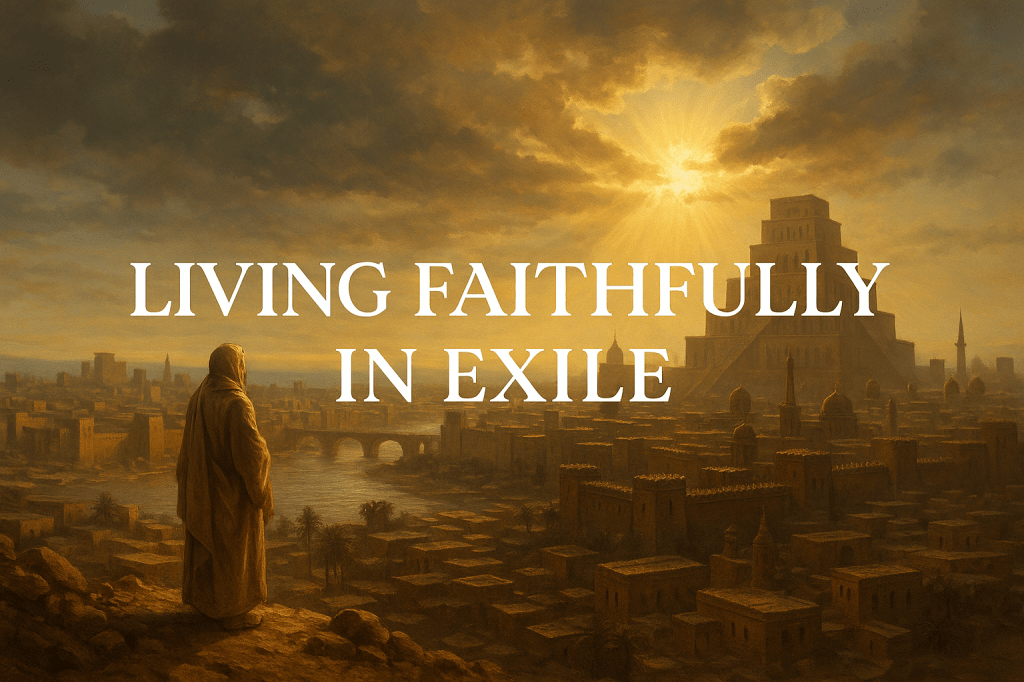
It’s a beautiful promise—but one that’s often taken out of context. Behind those comforting words lies a story of judgment, exile, and waiting. Jeremiah’s message wasn’t written to a people basking in prosperity—it was written to a people living in Babylon, far from home, facing the consequences of their rebellion.
Yet even there, in the midst of captivity, God spoke of plans. Of purpose. Of hope. Let’s look closer at Jeremiah 29:4–11 and discover what it means to live faithfully when life feels like exile.
A Letter from a Prophet to the Exiles
Jeremiah 29 contains a letter written by the prophet Jeremiah from Jerusalem to the exiles in Babylon. These weren’t tourists—they were prisoners of war. The Babylonians had ransacked Jerusalem, destroyed the temple, and carried off the best and brightest of Judah’s population.
In the midst of this crisis, false prophets were spreading false hope. They told the people, “Don’t worry! God will bring you home soon. This won’t last long.”
But Jeremiah’s message was different. He wrote to correct their misplaced optimism. He told them the exile wouldn’t be short—it would last seventy years (v.10). Most of those reading the letter would not live to see the return. But God’s message was not hopeless. He gave them specific instructions on how to live while they waited.
1. Exile as Divine Discipline
In verse 4, God makes something abundantly clear:
“Thus says the Lord of hosts, the God of Israel, to all the exiles whom I have sent into exile from Jerusalem to Babylon.”
The exile wasn’t just a political tragedy—it was divine discipline. God sent them there. Babylon was not the accident; it was the classroom.
Through the prophets, God had long warned His people about idolatry, injustice, and covenant unfaithfulness. But they refused to listen. Now, in exile, He would refine them, purify their faith, and teach them to seek Him again.
Sometimes, what feels like a punishment is actually a pruning. God wasn’t finished with His people. He was reshaping them for future restoration.
2. Live Faithfully Where God Has Placed You
The first command in Jeremiah’s letter is startling:
“Build houses and live in them; plant gardens and eat their produce. Take wives and have sons and daughters…” (Jeremiah 29:5–6)
In other words: Don’t just survive in Babylon—live.
They were to settle down, build homes, raise families, and cultivate life in the land of their captivity. That must have sounded absurd to people who longed to return to Jerusalem. Yet God’s will for them was not escape—it was endurance.
The same is true for us. Sometimes, we find ourselves in seasons of life we didn’t choose—stuck in jobs that drain us, battling illnesses we didn’t see coming, or walking through grief we never asked for. Our first instinct is to pray, “God, get me out of this.”
But sometimes, God says, “Stay. Build. Plant. Live.”
Faithfulness is not waiting for better circumstances—it’s living obediently in the ones we have. God wanted His people to thrive in Babylon, not because Babylon was good, but because God is. He is still at work, even when we’re far from where we want to be.
3. Seek the Welfare of the Place Where You Are
“Seek the welfare of the city where I have sent you into exile, and pray to the Lord on its behalf, for in its welfare you will find your welfare.” (Jeremiah 29:7)
Babylon was the enemy. It was the empire that burned their temple and mocked their God. And yet, God tells His people to seek Babylon’s shalom—its peace, prosperity, and well-being.
This would have been unthinkable. But here, God reveals a profound truth: His people are called to be a blessing wherever they are—even in enemy territory.
We are not called to isolate from the world, but to bless it. To pray for it. To bring God’s peace into it. Jesus would echo this same truth centuries later when He said, “Love your enemies and pray for those who persecute you.” (Matthew 5:44)
As exiles in our own culture, we too are called to live this way. Our citizenship is in heaven, but our ministry is here.
So ask yourself: are you praying for the welfare of your city? Are you serving your community, even if it doesn’t share your values? Are you seeking the good of the people around you, even those who oppose you?
In the welfare of Babylon, God said, His people would find their own welfare. That’s still true today. When we serve others—even those who don’t understand our faith—we reflect the heart of Christ.
4. Beware of False Hope
“Do not let your prophets and diviners who are among you deceive you… for it is a lie that they are prophesying to you in my name.” (Jeremiah 29:8–9)
False hope can be more dangerous than despair. The exiles wanted to believe that their suffering would soon end. But God called them to embrace the long road—seventy years of waiting.
Why? Because spiritual maturity takes time. Faith forged in exile is stronger than optimism built on illusion. We live in a culture that craves instant relief. We want quick fixes, painless faith, and immediate deliverance. But God’s plans often unfold slowly, shaping us through perseverance. His promises are sure, but they come in His timing.
5. Trust God’s Timing and His Plans
“When seventy years are completed for Babylon, I will visit you, and I will fulfill to you my promise and bring you back to this place.” (Jeremiah 29:10)
The seventy years represent a full generation—long enough that many would die in exile. Yet God was not absent. He was faithful to His word.
“For I know the plans I have for you, declares the Lord, plans for welfare and not for evil, to give you a future and a hope.” (Jeremiah 29:11)
This was not a promise of immediate comfort; it was a promise of ultimate restoration. God’s people were to trust that His purposes would prevail—even when they couldn’t see how.
And so it is for us. We may not understand what God is doing, but He knows. His plans are not to harm us but to shape us for eternity. His promises are not empty clichés; they are the anchor of our faith when everything else feels uncertain.
6. Living as Exiles Today
In the New Testament, Peter calls believers “sojourners and exiles” (1 Peter 2:11). This world is not our home. Yet while we are here, we are to live faithfully, serve humbly, and hope expectantly. We build, plant, pray, and bless—even in Babylon.
The exile of Jeremiah 29 was not permanent, and neither is ours. The story of redemption is one of homecoming—God bringing His people back from exile, not to Jerusalem, but to a new heaven and new earth.
Until then, we live in hope. We trust the One who knows the plans He has for us.
Conclusion: Hope in the Hard Places
Jeremiah’s letter to the exiles is as relevant today as it was 2,500 years ago. It reminds us that even when we feel displaced, discouraged, or disoriented, God’s hand is still upon us.
- He calls us to live faithfully where He has placed us.
- He commands us to seek the good of those around us.
- He promises that His plans are for our good, to give us a future and a hope.
You may not be in Babylon, but maybe you’re walking through your own season of exile—a time of loss, waiting, or uncertainty.
Remember this: God has not forgotten you. He knows where you are, and He knows what He’s doing. The exile is not the end of the story. It’s the place where hope begins to grow.
Live faithfully. Pray earnestly. Trust deeply.
Even in Babylon—especially in Babylon—God is still at work.
Soli Deo Gloria.
 TheoloJeep
Leave a comment