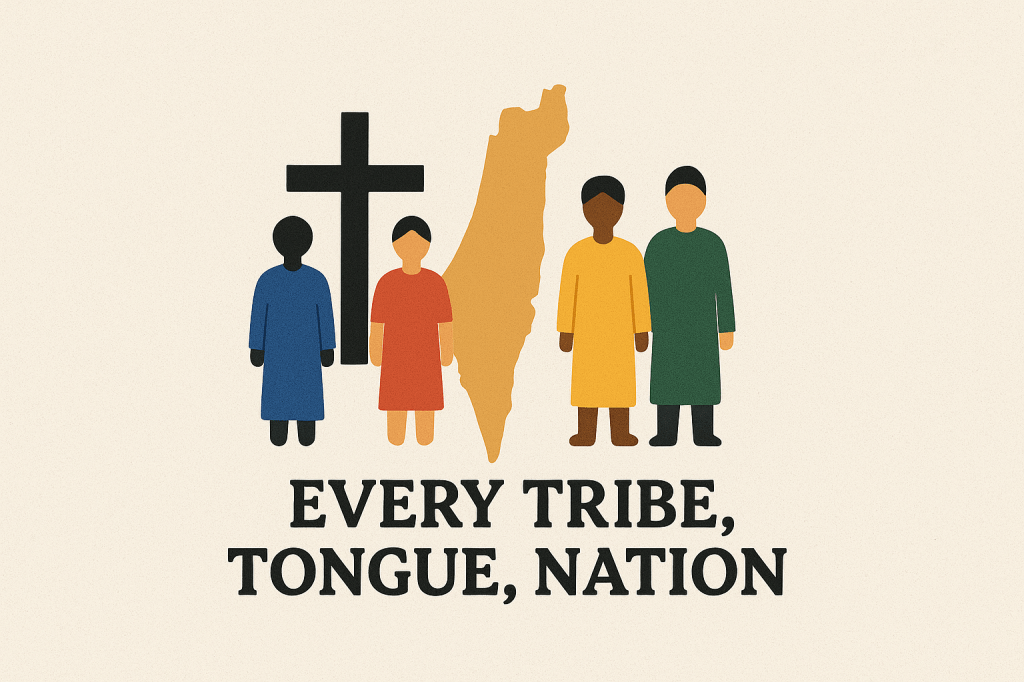
Introduction: Clearing the Air
Few theological terms spark more misunderstanding than Replacement Theology. For many, it’s a theological slur — a way to accuse anyone who sees continuity between Israel and the Church of “replacing” God’s chosen people. But that caricature misses the beauty of God’s redemptive plan entirely.
The Church does not replace Israel. The Church fulfills Israel — because Jesus fulfills Israel. This isn’t about subtraction; it’s about culmination.
Let’s walk through what that means biblically and why it matters for how we read the entire story of Scripture.
1. The Root of the Confusion
The accusation of Replacement Theology usually comes from a Dispensational framework — one that separates Israel and the Church as two distinct peoples with two distinct plans of God.
But in Scripture, God’s plan is always one story, told in two covenants. The Old points forward to Christ; the New fulfills it in Christ.
The confusion arises when people mistake fulfillment for replacement. Fulfillment does not erase what came before — it brings it to completion.
Think of a seed and a tree. The tree doesn’t replace the seed — it’s the result of the seed doing exactly what God designed it to do. Israel was the seed; the Church is the tree that grew from it.
2. Jesus Is the True Israel
The heart of this issue is Christ Himself. Jesus is called the “true vine” (John 15:1), the “offspring of Abraham” (Galatians 3:16), and the perfect covenant keeper who embodies Israel’s calling before God.
Where Israel failed, Jesus succeeded. Where Israel broke covenant, Jesus fulfilled it.
In Him, all of God’s promises find their “Yes and Amen” (2 Corinthians 1:20).
So when we speak of the Church as God’s people, we’re not talking about a new entity that pushed Israel aside. We’re talking about the body of Christ — the faithful remnant expanded to include all who belong to Him by faith.
The Church doesn’t replace Israel; the Church is Israel — fulfilled in Christ and expanded to the nations.
3. The Apostolic Witness
The apostles understood this perfectly.
Peter calls the Church a “chosen race, a royal priesthood, a holy nation” (1 Peter 2:9) — titles lifted directly from Exodus 19:6. He wasn’t being poetic; he was being theological.
Paul echoes this when he writes, “It is not the children of the flesh who are the children of God, but the children of the promise” (Romans 9:8). In Christ, “there is neither Jew nor Greek” (Galatians 3:28) because what matters is not ethnicity, but union with the Messiah who fulfills Israel’s purpose.
The gospel did not erase God’s covenant people; it fulfilled the covenant’s true intent — to bless all nations through Abraham’s Seed.
4. One People of God, Not Two Plans
From Genesis to Revelation, God’s redemptive plan is unified:
- One Savior (Jesus)
- One covenant of grace (fulfilled in Christ)
- One people (redeemed by faith, not genealogy)
Paul calls the Church “the Israel of God” (Galatians 6:16), and John’s Revelation shows twelve tribes and twelve apostles together in the New Jerusalem — a symbol of complete redemption, not separation.
Dispensationalism divides what Scripture unites. Biblical theology shows that God always intended to graft the Gentiles into the same olive tree (Romans 11:17–24), not plant a second one beside it.
5. Fulfillment Magnifies God’s Faithfulness
Far from denying God’s promises to Israel, fulfillment theology magnifies them. It shows that God kept His word — not in part, but in full. Every promise He made to Abraham, Isaac, Jacob, and David finds its ultimate realization in Jesus Christ.
God didn’t abandon His people; He expanded His people. He took the faith of Abraham and opened it to the nations, just as He promised from the start (Genesis 12:3).
So, the Church isn’t a replacement — it’s the result of God’s covenant faithfulness.
6. Why This Matters Today
If we misunderstand this, we risk misunderstanding the gospel itself. Replacement Theology says, “God’s done with Israel.” Fulfillment Theology says, “God’s promises to Israel are gloriously complete in Christ.”
One view limits grace; the other magnifies it.
And practically, this shapes how we see the Church’s mission. We are not a “Plan B” people. We are God’s covenant community, called to embody His faithfulness and proclaim His redemption to all nations.
The Church exists because Jesus reigns — not because Israel failed.
Conclusion: The Seed Has Blossomed
God’s plan has always been consistent: one covenant of grace, one Messiah, one redeemed people.
The story didn’t end with Israel’s failure — it reached its climax in Israel’s Messiah. The Church stands, not as a replacement, but as a testimony that God’s promises never fail.
The seed of Abraham has become a tree of life for the nations. And every branch that abides in Christ — Jew or Gentile — bears fruit to the glory of the God who keeps His word forever.
Key Takeaway
The Church is not Israel’s replacement.
The Church is Israel’s fulfillment in Christ.
Fulfillment theology is not arrogance — it’s worship.
Soli Deo Gloria.
 TheoloJeep
Leave a comment