No student ever called Bob Paremore “China Doll.”
That nickname belonged to another world entirely—one he earned long before he ever stepped into a high-school gym as a coach. But the irony of it always stayed with me. Of all the men who could carry a name like that, Paremore was the least likely candidate.
He was anything but fragile.
When I knew him at Godby High School, Bob Paremore looked like a man out of time. Balding on top, long sideburns, a thick handlebar mustache, and those unmistakable 1970s-style tinted glasses. But it was his build that made the real impression. Even decades after his playing days, he was still put together like a bodybuilder or a professional wrestler—broad chest, dense arms, thick through the shoulders.
Not “former athlete” shape.
Disciplined shape.
He didn’t just teach physical education.
He embodied it.
A Football Life Defined by Speed
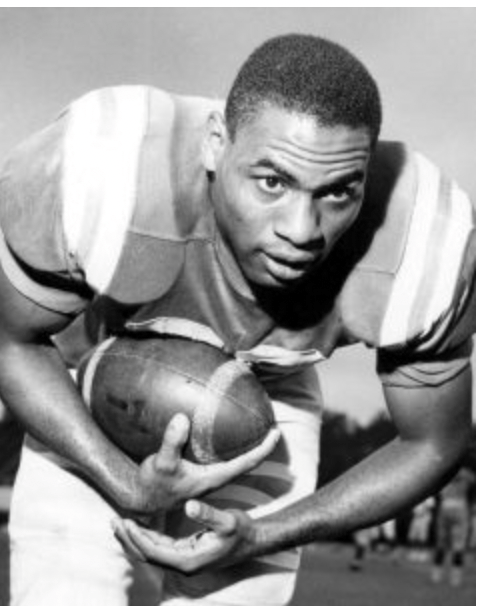
Bob Paremore’s athletic career began long before most of us ever knew his name. He played his college football at Florida A&M University, where he starred as a halfback from 1959 to 1962. In an era when offenses leaned heavily on the run, Paremore stood out for his explosiveness and speed, not brute size.
He shared the backfield with Bob Hayes—later known as “Bullet Bob,” one of the fastest men to ever live—and together they formed one of the most dangerous offensive pairings in Black college football at the time. Paremore himself was a legitimate sprinter, clocked at elite speeds that made him a constant threat whenever he touched the ball.
He produced at a high level, averaging more than six yards per carry in multiple seasons and scoring in double figures during his senior year. His play earned him national recognition, including being named Florida A&M’s first NCAA “Little All-America” selection. In 1962, he also became one of the first African American players invited to participate in the North–South Shrine Game, where he was recognized not only for performance but for sportsmanship.
The Professional Years
Paremore’s speed and production earned him a chance at the professional level. He was selected in the 1963 NFL Draft by the St. Louis Cardinals, where he played as a halfback, contributing both as a runner and a receiver.
In 1965, he became the first player ever signed by the Atlanta Falcons—a new expansion franchise that had yet to take the field. While awaiting the team’s inaugural season, he played for the Florida Brahmans in a minor professional league. Ultimately, he was released before the Falcons’ first game, but his football career was far from finished.
He continued playing in the Canadian Football League, suiting up for the Montreal Alouettes and later the Calgary Stampeders. In Canada, he found success again, at one point leading his division in rushing before injuries began to take their toll.
It was during these early years—beginning with his premature birth—that the nickname “China Doll” first emerged. His mother gave it to him because of how small and fragile he seemed at the start of life. Football culture, always fond of irony, kept it alive. And yet the name never fit the man he became.
Back Home, Building More Than Athletes
After football, Bob Paremore didn’t drift. He didn’t chase nostalgia or cling to former glory. He returned home to Tallahassee and invested his life where it mattered most—in young people.
For more than three decades, he served as a physical education teacher and coach at Godby High School, working with football and track athletes and shaping generations of students. He wasn’t flashy. He wasn’t soft. He believed in showing up, putting in the work, and learning to endure.
When Paremore walked into the gym, the room changed. He didn’t need to bark orders or raise his voice. His presence alone carried authority. You could tell this was a man who had lived under weight—iron weight, expectation weight, responsibility weight—and had learned how to carry it.
As a student, I remember discovering that we shared the same birthday. It was one of those details you file away without knowing why. Only later do you realize how certain figures stay with you—not because they demanded attention, but because they lived with quiet gravity.
Leaving Something Standing
Bob Paremore left another legacy in Tallahassee—one that still appears on a map.
On land that had belonged to his grandfather, part of an old plantation in northern Leon County, he developed what became Paremore Estates. Ground that had once been farmland became streets and homes. The neighborhood even includes China Doll Drive, a subtle nod to the nickname that followed him from birth.
Men like Paremore don’t just pass through the world. They build. They shape land. They establish boundaries that outlive them.
He was later inducted into the Florida A&M University Hall of Fame, recognizing not only his football career but his contributions to track and athletics as a whole. But plaques and statistics only tell part of the story.
The Quiet Influence
I didn’t know it then, but men like Bob Paremore were teaching me more than pushups, laps, or drills.
They were showing me what it looked like for a man to stand firmly in who he was, to live with discipline, and to invest that strength in others. He never sat me down for a speech about mentoring or legacy. He didn’t need to. His life did the talking.
Years later, when I found myself coaching, mentoring young men, and calling boys to grow into something sturdier than what the culture offers them, I recognized the thread.
Bob Paremore didn’t know the influence he would have on me. Most mentors don’t.
Some legacies don’t come from what a man says.
They come from who he was—and who he quietly helped others become.
Not a china doll.
Forged steel.
Soli Deo Gloria.
 TheoloJeep
Leave a comment