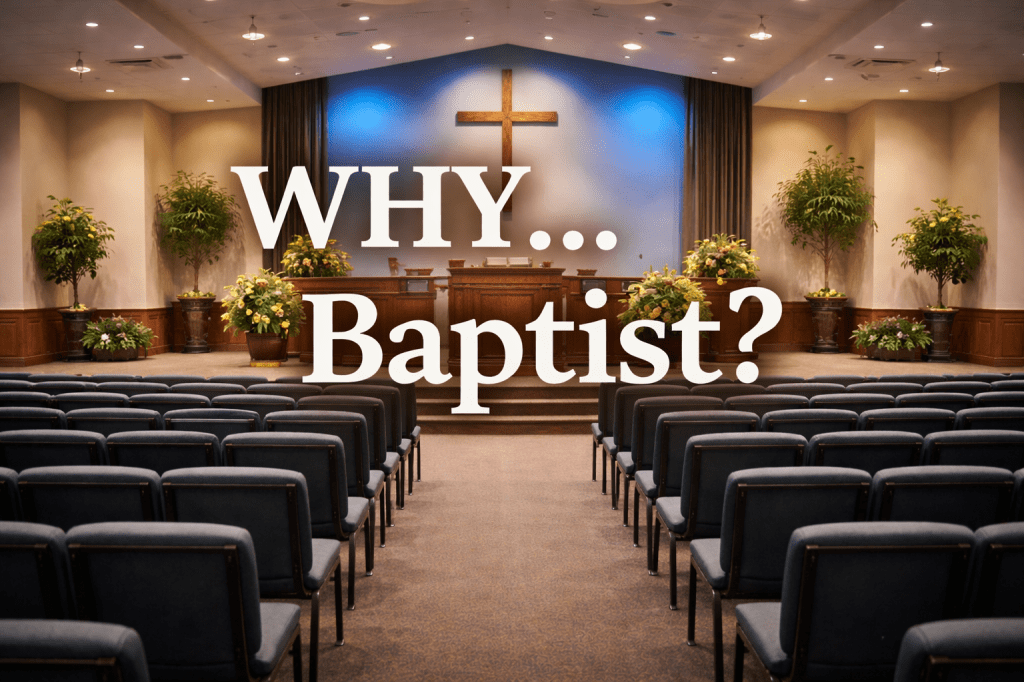
A Biblical Examination
Baptists are one of the largest Protestant traditions in the world. In America especially, Baptist churches are everywhere — from small rural congregations to massive urban churches.
But “Baptist” does not describe one theological flavor.
There are:
- Reformed Baptists
- Southern Baptists
- Free Will Baptists
- Independent Baptists
- General Baptists
Some are deeply confessional.
Some are revivalistic.
Some are highly structured.
Some are fiercely independent.
So the question is not whether Baptists are numerous.
What defines Baptist theology — and is it faithful to Scripture?
1. Historical Roots
The Baptist movement began in the early 1600s in England.
Early Baptists emerged out of English Separatism, arguing for:
- Believer’s baptism
- Religious liberty
- Congregational church governance
Two primary streams developed:
- General Baptists (more Arminian in theology)
- Particular Baptists (Reformed in soteriology)
The 1689 Second London Baptist Confession became a defining document for Reformed Baptists, closely aligned with the Westminster Confession but differing primarily on baptism and church polity.
From England, Baptist theology spread to America, where it became deeply influential.
2. What Baptists Get Right
Baptists strongly emphasize:
- The authority of Scripture alone
- Personal conversion
- Justification by faith
- Religious liberty
- The autonomy of the local church
Believer’s baptism highlights the necessity of personal faith.
Baptist theology often protects the regenerate nature of church membership — the visible Church is composed of professing believers.
Historically, Baptists have also defended religious liberty and the separation of church and state.
There is real strength here.
3. Major Doctrinal Distinctives
Believer’s Baptism
Baptists teach that baptism follows a credible profession of faith. It is a public sign of union with Christ.
Infants are not baptized because baptism is tied to repentance and faith.
Congregational Governance
Authority resides in the local congregation under Christ. Elders may lead, but the congregation affirms major decisions.
There is no hierarchical structure above the local church.
Regenerate Church Membership
Church membership is reserved for those who profess faith in Christ.
The visible Church should reflect the spiritual reality of the New Covenant.
4. Where Scripture Challenges Baptist Practice
Radical Individualism
While congregational governance is biblical in many respects, it can drift toward individualism.
Scripture emphasizes shared leadership through elders (Acts 14:23).
If elder leadership is weak or symbolic, churches may become personality-driven or democratic in unhealthy ways.
Doctrinal Minimalism
In some Baptist contexts, confessional theology is minimized. Churches may unite around vague statements of faith rather than robust doctrinal clarity.
Scripture calls churches to guard sound doctrine (Titus 1:9).
When doctrinal depth is sacrificed for growth or unity, stability suffers.
Revivalism and Decisionism
In certain Baptist traditions, conversion is reduced to a momentary decision rather than a transformed life.
Scripture speaks of repentance, faith, and perseverance (Matthew 24:13).
If church membership is based on shallow professions, regenerate membership becomes difficult to maintain in practice.
5. Why It Matters
Baptist theology emphasizes personal responsibility and conscious faith.
That is a strength.
But when autonomy becomes isolation, or when freedom becomes doctrinal looseness, churches drift.
The Baptist commitment to believer’s baptism and regenerate membership is rooted in a serious reading of the New Covenant.
But Baptist churches must guard against reducing theology to individual preference.
The Church is not a voluntary association of consumers.
It is the body of Christ.
Final Assessment
Baptist theology offers:
- A strong emphasis on personal faith
- Clear connection between baptism and conversion
- Protection of local church accountability
- A historic defense of religious liberty
But it also risks:
- Weak ecclesiology in practice
- Doctrinal minimalism
- Overemphasis on individual decision
- Leadership instability in congregational settings
The question is not whether Baptist churches can be healthy.
They can be deeply healthy.
The question is whether Baptist distinctives are rooted clearly and consistently in Scripture — and whether Baptist practice lives up to Baptist theology.
And so we ask:
Why Baptist?
If Scripture alone governs the Church, then even beloved traditions must be measured by the Word.
The Church belongs to Christ.
And Christ’s Word must shape how we baptize, govern, and gather.
Soli Deo Gloria.
 TheoloJeep
Leave a comment