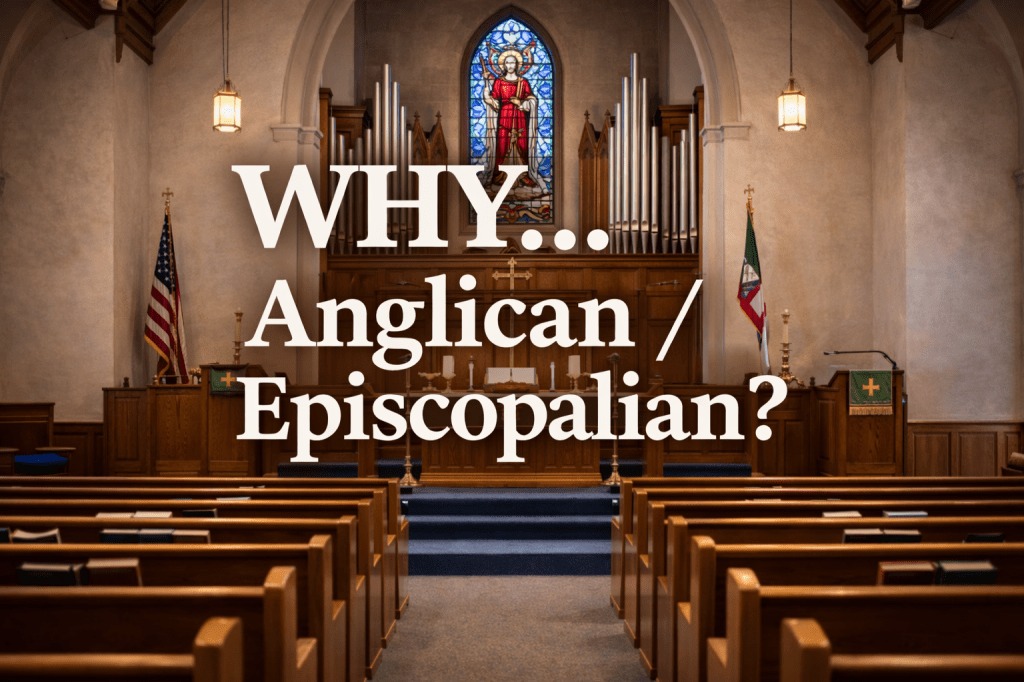
A Biblical Examination
Anglicanism began in the English Reformation.
Episcopalianism is its American expression.
Historically, Anglican theology sought to chart a middle path — a via media — between Roman Catholicism and continental Reformed Protestantism.
It retained:
- Bishops
- Liturgical worship
- Historic creeds
While rejecting:
- Papal authority
- Transubstantiation
- Purgatory
Anglicanism has often described itself not as a radical reform movement, but as a church reformed according to Scripture while maintaining historic continuity.
The question, as always, is not whether it is ancient or dignified.
The question is: Is it faithful to Scripture?
1. Historical Roots
The Church of England separated from Rome in the 16th century.
While political circumstances initiated the break, theological reform deepened under Archbishop Thomas Cranmer.
The Thirty-Nine Articles (1571) articulated Protestant doctrine, affirming:
- The sufficiency of Scripture
- Justification by faith
- Two sacraments instituted by Christ
- The rejection of certain Roman teachings
Anglican worship was shaped by the Book of Common Prayer — a liturgical form deeply rooted in Scripture.
After the American Revolution, Anglican churches in the United States became the Protestant Episcopal Church.
Though historically Protestant, Anglicanism has always included a range of theological emphases — evangelical, Anglo-Catholic, and broad church expressions.
This theological breadth defines much of its identity.
2. What Anglican / Episcopalian Theology Gets Right
Historically, Anglican theology affirms:
- The Trinity
- The full deity and humanity of Christ
- The authority of Scripture
- Justification by faith
- The historic creeds
Its liturgy is rich and Scripture-saturated.
The Book of Common Prayer has shaped Christian devotion for centuries, guarding worship from emotional instability and theological novelty.
Anglicanism also preserved reverence and sacramental seriousness without fully embracing Roman sacramental theology.
At its best, it offers Protestant doctrine within historic Christian worship.
3. Major Doctrinal Distinctives
Episcopal Governance
Anglican churches are governed by bishops in historic succession.
Authority flows through this episcopal structure rather than congregational independence.
The Via Media
Anglicanism has historically positioned itself between Rome and Geneva — holding to Protestant soteriology while retaining ancient forms of worship and governance.
Sacramental Theology
Anglicanism affirms baptism and the Lord’s Supper as means of grace, though it rejects transubstantiation.
The exact nature of Christ’s presence in the Eucharist has often been described with deliberate restraint.
Theological Breadth
Unlike many confessional traditions, Anglicanism has allowed significant theological diversity within its structures.
This has historically allowed coexistence between evangelical and more sacramental expressions.
4. Where Scripture Challenges Anglican / Episcopalian Theology
Apostolic Succession
The New Testament affirms apostolic authority (Ephesians 2:20).
But the apostles were uniquely commissioned witnesses of the risen Christ.
Scripture does not clearly teach an unbroken episcopal chain carrying equivalent authority.
Local churches in the New Testament appear led by elders and overseers (Acts 14:23; Titus 1:5).
The question is whether episcopal succession is biblically mandated or historically developed.
The Via Media Model
Seeking balance can promote unity.
But Scripture does not call the Church to balance theological systems — it calls the Church to truth.
When theological breadth becomes doctrinal ambiguity, clarity can weaken.
Sacramental Emphasis
Baptism and the Lord’s Supper are commanded by Christ.
But Scripture consistently presents faith as the instrument of justification (Romans 3:28).
If sacramental participation is elevated beyond its biblical role, the distinction between sign and substance may blur.
5. Why It Matters
Anglicanism offers historic continuity and structured worship.
But church authority must ultimately rest in Scripture, not structure.
If doctrinal boundaries are too flexible, theological drift becomes possible.
If sacramental theology becomes central to assurance, the focus may shift from Christ’s finished work to ecclesial administration.
These are not aesthetic concerns.
They shape how believers understand authority, worship, and salvation.
Final Assessment
Anglicanism historically offered a Protestant orthodoxy clothed in ancient liturgy.
At its best, it upheld Scripture while preserving historic Christian worship.
But its structural breadth and commitment to a middle way raise important questions about doctrinal clarity and authority.
The issue is not whether Anglicanism is dignified or historic.
It is.
The issue is whether Scripture alone stands as final authority above tradition, structure, and theological diversity.
And so we ask:
Why Anglican / Episcopalian?
If Christ governs His Church through His Word, then even beautiful and ancient forms must remain accountable to it.
The Church belongs to Christ.
And Christ’s Word must remain final.
Soli Deo Gloria.
 TheoloJeep
Leave a comment