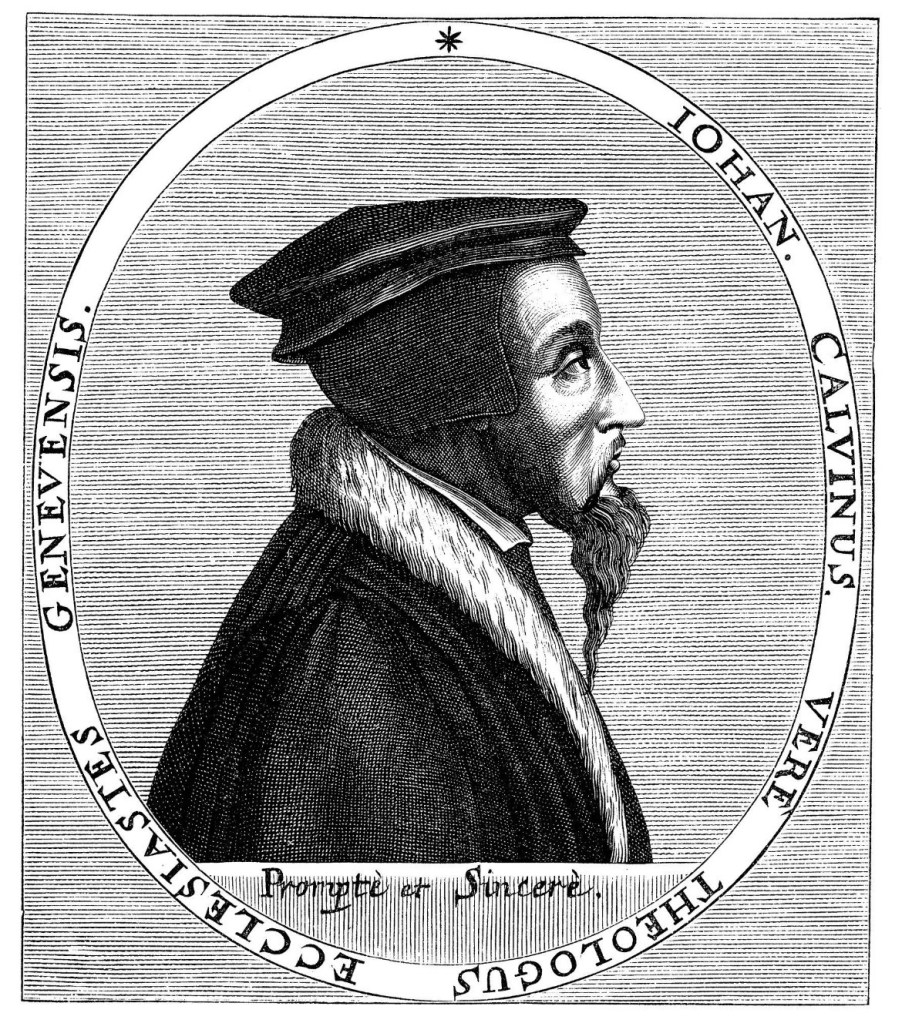
Not a myth. Not a villain. A man used by God—brilliantly and imperfectly.
Why Calvin Still Matters
Few figures loom larger over the Reformation than John Calvin.
To some, he’s a faithful expositor who helped recover the authority of Scripture and the centrality of God’s glory. To others, he’s a symbol of severity—rigid, domineering, even harsh.
The truth is more complex.
“Nearly all the wisdom we possess… consists of two parts: the knowledge of God and of ourselves.”
Calvin understood both—at least enough to know that one humbles the other.
Early Life: A Mind Formed for Precision
John Calvin was born on July 10, 1509, in Noyon, France.
Originally destined for the priesthood, his path shifted toward law—where he developed the analytical precision that would later define his theology.
He was not a monk like Luther. He was a scholar. A thinker. A system-builder.
You can feel it in everything he wrote.
A Sudden Conversion
In the early 1530s, Calvin experienced what he described as a “sudden conversion.”
Not emotional spectacle—but decisive surrender.
“God subdued and brought my mind to a teachable frame.”
He broke with Rome. He embraced Scripture. And almost immediately, he became a target.
The Institutes: A Young Man’s Magnum Opus
At just 26 years old, Calvin published The Institutes of the Christian Religion.
It wasn’t just a protest. It was a blueprint.
Clear. Biblical. Structured.
“The Word of God is the only rule by which all religion must be measured.”
The Reformation didn’t just need courage. It needed clarity.
Calvin gave it both.
Geneva: The Calling He Didn’t Want
Calvin never intended to stay in Geneva.
But William Farel confronted him—and warned that refusing would bring God’s judgment on his comfort.
So he stayed.
And then… he was expelled.
His first attempt at reform failed. Completely.
That matters.
Calvin was not universally embraced. His vision was resisted.
Strasbourg: Where the Edges Softened
In exile, Calvin pastored refugees and married Idelette de Bure.
This season shaped him deeply.
Less theorist. More shepherd.
Less rigid. More pastoral.
Geneva (Again): Building Something That Lasted
When Calvin returned in 1541, everything changed.
He didn’t just preach—he built.
- Verse-by-verse preaching
- Church discipline through the Consistory
- Training pastors at the Geneva Academy
- Sending missionaries across Europe
“A dog barks when his master is attacked. I would be a coward if I saw that God’s truth is attacked and yet remained silent.”
Geneva became a sending base—not just a city.
Strengths Worth Remembering
1. Unshakable Commitment to Scripture
Calvin didn’t speculate—he explained.
2. Theological Clarity
He helped systematize what others had recovered.
3. Church Structure
Elders, discipline, accountability—order rooted in Scripture.
4. Global Vision
He trained men not just to think—but to go.
The Hard Truths We Can’t Ignore
The Servetus Affair
Michael Servetus denied the Trinity and was arrested in Geneva.
He was executed.
Burned at the stake.
Calvin did not carry out the execution—but he supported the trial and agreed with the sentence.
“Whoever shall now contend that it is unjust to put heretics… to death… will knowingly and willingly incur their very guilt.”
This is the hardest part of Calvin’s legacy.
It forces us to reckon with a world where church and state were dangerously intertwined.
And it reminds us: even great men can be wrong in serious ways.
A Culture of Control?
The Consistory regulated behavior in Geneva—church attendance, morality, public conduct.
To some, it was necessary reform.
To others, it felt like overreach.
The tension is real—and worth wrestling with.
A Difficult Personality
Calvin could be sharp. Unyielding. Intense.
He was not gentle with persistent opposition.
And yet…
He was also a faithful pastor to many.
Personal Suffering
Calvin’s life was not easy.
- His wife died young
- His only child died in infancy
- He lived with chronic illness
And still—he labored relentlessly.
“We are not our own: therefore let us not make it our end to seek what may be agreeable to our flesh.”
Final Days and Lasting Impact
Calvin died in 1564 and was buried in an unmarked grave.
No monument.
No shrine.
Just a life poured out.
His influence spread across France, Scotland, the Netherlands—and eventually into America.
Final Reflection
Calvin was not the hero of the story.
God was.
And still is.
“Soli Deo Gloria.”
The God who uses flawed men to preserve perfect truth.


Leave a Reply