Part 13: Another Turning Point
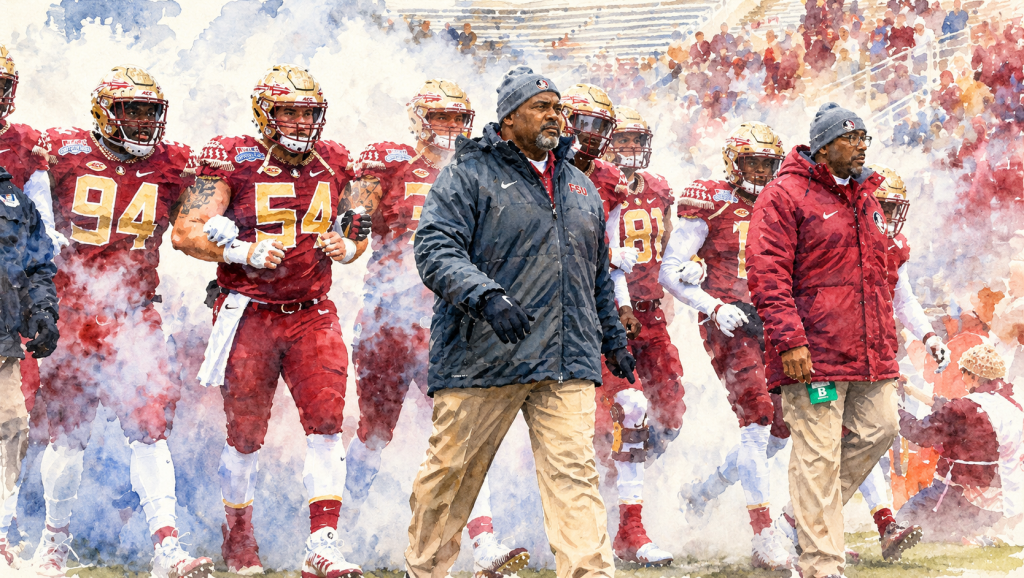
By 2015, Florida State was no longer the team that had won the national championship two years earlier.
But they were still Florida State.
And that meant the expectations were still there.
The 2015 season began with the Seminoles ranked No. 10 in the country, and Dalvin Cook was quickly becoming the face of the program. He was one of those players who seemed capable of changing a game every time he touched the ball.
Florida State won its first six games before losing a strange one to Georgia Tech, 22–16. A few weeks later, Clemson beat the Seminoles 23–13.
Still, FSU finished the regular season 10–2 and had a chance to finish strong.
They did that against Florida.
The Seminoles went to Gainesville and beat the Gators 27–2.
That felt good.
But the season ended with a 38–24 loss to Houston in the Peach Bowl.
It was another reminder that Florida State was still good.
But good was no longer the same thing as being great.
2016
The next year started with one of those games that reminded me why I had fallen in love with Florida State football in the first place.
The Seminoles opened the season against Ole Miss and fell behind.
Then they came back.
Florida State won 45–34.
It wasn’t a perfect season, though.
The Seminoles lost to North Carolina 37–35 and then lost a wild 37–34 game to Clemson.
They finished the regular season 9–3.
Then came the Orange Bowl.
Florida State played Michigan, and the game became another classic.
The Seminoles won 33–32.
One point.
That seemed appropriate for where the program was at that point.
Still capable of beating anybody.
Still capable of making you believe.
But no longer dominating the way the teams of 2013 and 2014 had.
2017
Then came the season that changed everything again.
Florida State entered 2017 ranked No. 3 in the country.
The expectations were still enormous.
And then they played Alabama.
The Seminoles lost 24–7, but the bigger blow came when quarterback Deondre Francois suffered a season-ending knee injury.
From there, the season unraveled.
Florida State lost to NC State.
They lost to Miami.
They lost to Clemson.
They lost to Louisville.
They lost to Boston College.
They lost to Florida.
For the first time in a very long time, Florida State finished the regular season without enough wins to qualify for a bowl.
The Seminoles were 5–6.
That number looked strange next to the Florida State logo.
But there was another number that mattered even more.
Eight.
Jimbo Fisher had spent eight seasons as Florida State’s head coach. He had won a national championship, three ACC championships, and 83 games.
Then, in November, everything changed.
Fisher left Florida State to become the head coach at Texas A&M. Odell Haggins took over as interim head coach for the final two games of the season.
In less than a decade, Florida State had now said goodbye to two head coaches.
First, Bobby Bowden.
Now, Jimbo Fisher.
It was strange.
Bowden had built the program into something I never could have imagined when I was sitting behind that chain-link fence in 1989.
Jimbo had taken over that program and brought it back to the very top.
And now both were gone.
Florida State beat Delaware State and Southern Miss to finish the season 7–6.
But the wins almost felt secondary.
The program was entering another transition.
Bobby was gone.
Jimbo was gone.
Jameis was gone.
Dalvin was gone.
The championship team I had watched with my sons was becoming part of the past.
And I was left wondering what Florida State would look like next.
I had already lived through one coaching transition after Bobby Bowden.
Now I was about to watch another.
And after everything I had seen since 1989, I knew one thing:
Nothing stays the same forever.
Not players.
Not coaches.
Not teams.
Not life.
But I was still watching.


Leave a comment