Part Sixteen: The Voice
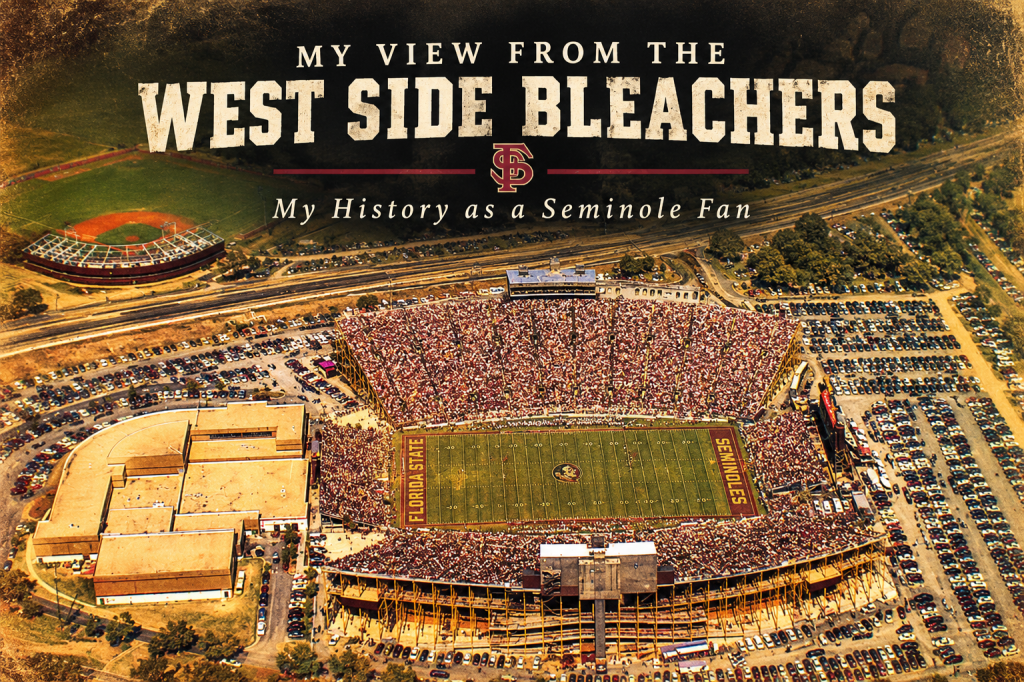
There were plenty of Saturdays when I couldn’t watch Florida State play.
Maybe I was working. Maybe I was away from home. Maybe there was something going on that kept me from sitting in front of the television for three or four hours.
But that didn’t mean I couldn’t follow the game.
I had Gene Deckerhoff.
For years, Gene Deckerhoff was the voice of Florida State football. He took over the Seminoles’ football radio broadcasts in 1979, long before I ever sat in the west-side bleachers at Doak Campbell Stadium. By the time I became a Florida State fan, his voice was already part of the experience.
And there was something about listening to a football game on the radio that was different from watching it on television.
Television showed me what happened.
Gene told me what was happening.
He could take a play that I couldn’t see and somehow make me see it anyway.
I could hear the snap.
I could hear the crowd.
I could hear the excitement build as a runner broke through the line or a quarterback dropped back to pass.
And Gene had a way of describing it that made the field seem much closer than it really was. You weren’t just listening to a football game. You were following the play as it developed, almost one step at a time.
It was storytelling.
The radio became a kind of window into Doak Campbell Stadium.
And when I couldn’t be there—or couldn’t watch—I could still be there in my own way.
That’s part of what made Gene different to me. He wasn’t simply announcing Florida State football. His voice became part of my memories of Florida State football.
The great teams.
The frustrating teams.
The close games.
The blowouts.
The games where I already knew what was happening before he finished describing it, and the games where his voice told me something unbelievable had just happened.
He was there through Bobby Bowden’s greatest years. He called Charlie Ward. He called the arrival of players like Warrick Dunn, Peter Warrick and Chris Weinke. He called the championships in 1993 and 1999. He called the years when Florida State was at the top of college football, and he was still there when the program began its long decline. He was there when Jimbo Fisher brought the Seminoles back to the top in 2013.
He was there for all of it.
And so was I.
Sometimes from the stands.
Sometimes from the couch.
Sometimes with my family.
And sometimes with nothing but a radio between me and the game.
That’s something I don’t want to lose in telling this story.
Because being a fan wasn’t always about watching.
Sometimes it was listening.
There is something uniquely personal about a radio broadcaster. On television, you’re watching the same pictures everyone else is watching. On the radio, the broadcaster becomes your eyes.
And Gene was very good at being my eyes.
He could tell the story of what was happening on that field in a way that made you feel like you were standing right there in the huddle.
That’s why, when I think about my history as a Seminole fan, Gene Deckerhoff belongs in it.
Not because he played a down.
Not because he coached a game.
But because for more than four decades, he helped me experience them.
He was there when I couldn’t be.
When work kept me away.
When life got in the way.
When I couldn’t sit down and watch the game, Gene made sure I didn’t have to miss it.
His voice carried Florida State into whatever room I happened to be in.
And when I hear that voice in my memory, I don’t just hear a broadcaster calling a football game.
I hear a part of my life.
I hear Saturdays from years ago.
I hear the excitement of a big play.
I hear the disappointment of a loss.
I hear the roar of Seminole fans.
I hear a voice that was there through Bobby Bowden, through the championships, through the long decline, through the rebuild, and back to the top again.
A lot changed during those years.
My life changed.
My family grew.
My sons grew up.
Coaches came and went. Players came and went. Seasons came and went.
But that voice was there.
And now, when I think about the title of this series—My View from the West Side Bleachers—I realize that the west side of Doak was only where the story began.
That first game in 1989 gave me a place to sit.
Gene Deckerhoff gave me a way to experience the games when I couldn’t be there.
In a sense, the west-side bleachers became the place from which I first learned to watch Florida State.
Gene became the voice that allowed me to keep watching from everywhere else.
The bleachers were a physical place.
His voice became a kind of home.
Gene Deckerhoff helped me stay connected to Florida State when I couldn’t watch with my own eyes.
In a strange way, he helped me keep watching.
And maybe that’s why he belongs in this story.
Because this isn’t really a story about all the games I saw.
It’s a story about why I kept watching.
Sometimes I watched from the stands.
Sometimes from the couch.
Sometimes with my family.
And sometimes I listened to Gene Deckerhoff tell me what was happening on the field and, for a few hours, made me feel like I was right there with them.
He wasn’t just telling me what happened.
He helped me be there.
And for a Seminole fan, that meant something.
The west-side bleachers are where my story began.
Gene’s voice helped carry it forward.
And I’m still watching… and listening.


Leave a Reply